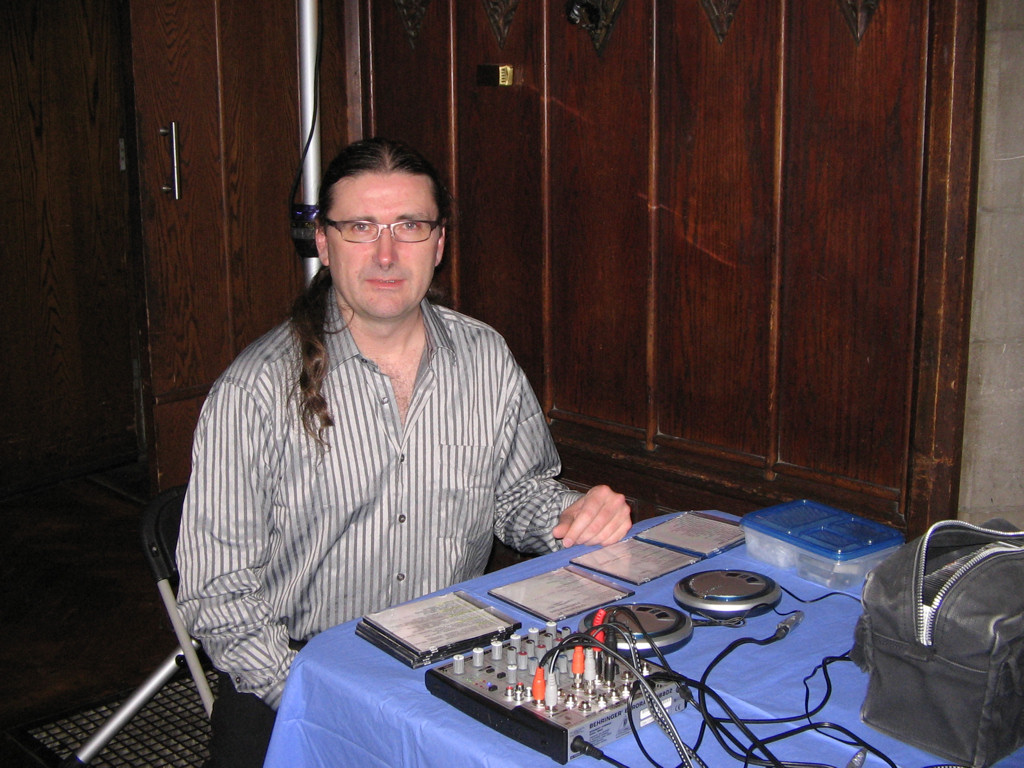
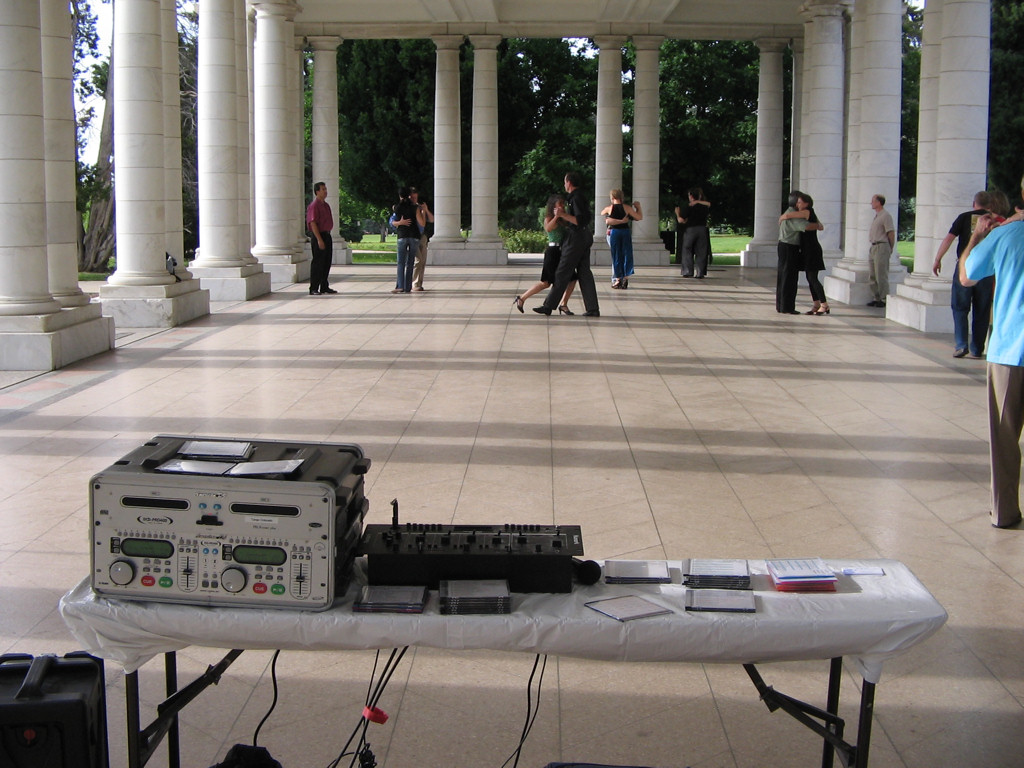
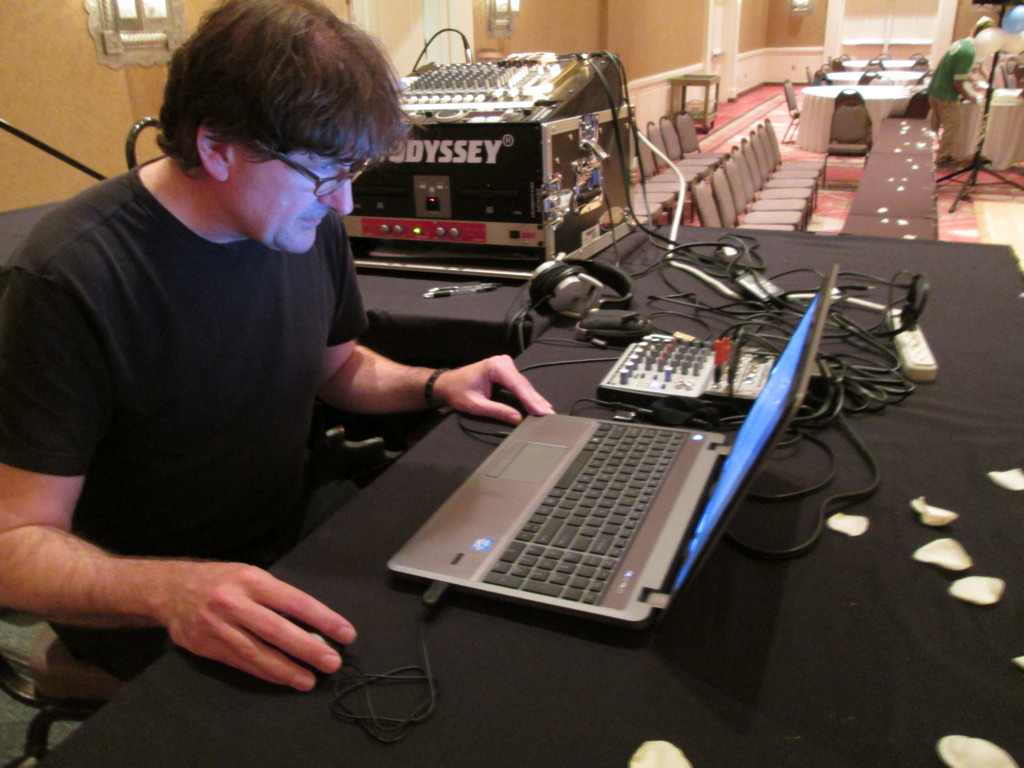
I have been a tango DJ since 1998, so I have had experience with many different methods of DJing. In the beginning I had my tango CD collection, which was relatively small. I would carry most of my collection to the milonga, and I would sit right there and play the songs. It required a lot of management and I didn’t get to dance as much. When I began hosting the Monday milonga at the Viscount Ballroom in late 1999 I got a CD ROM drive for my computer and began making my own CDs for DJing. I had pre-made tandas on these CDs so I was able to dance a lot more, and didn’t have to manage the machinery all the time. In 2012 I finally switched to using a computer and building tandas as I go. Then in 2012 Angela Bevill-Kohler started her record collection and I began to DJ using vinyl, this is DJing!
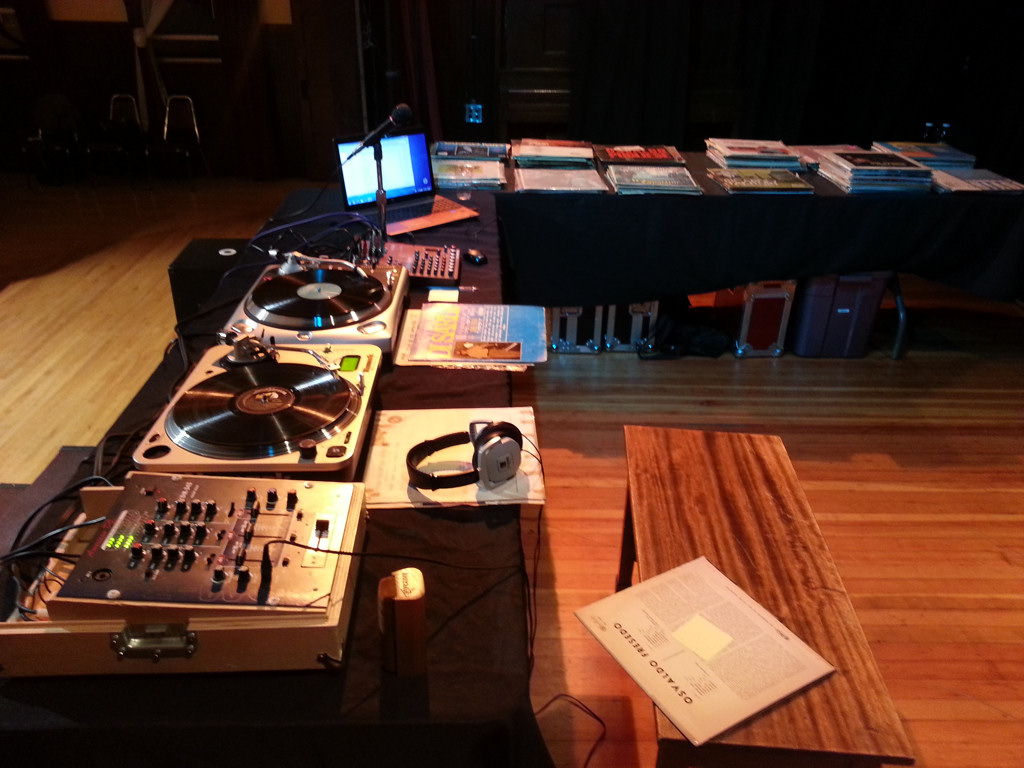 The basic equipment setup is two turntables, a DJ mixer, maybe a microphone for announcements, I use my computer for the cortinas so I don’t have to do those through the turntables. The headphones are not an option, you must have them to hear what you are doing. The DJ mixer allows you to listen to all channels, not just the one the audience can hear. Then there is the main sound system mixer and the amplifiers and speakers. I will adjust the tone controls on the DJ mixer but shouldn’t have to adjust anything on the main system after set up and sound check. That way my attention can be focused on the job at hand.
The DJ mixer has a slider control to simultaneously turn the volume down on one turntable channel and turn the volume up on the other. So when a song is finished I slide this control to the other channel, lift the needle from the record that I am done with, push the slider back to the original channel, set the needle down on the new record, and finally slide the slider back so the music can be heard from the new record. If everything goes well then the new song starts and the audience hasn’t heard anything but one song followed by another. If you do anything wrong then everyone hears it. It is embarrassing to set the needle down with the sound up making a loud popping sound. It is an intricate dance of the hands to make it all work seamlessly.
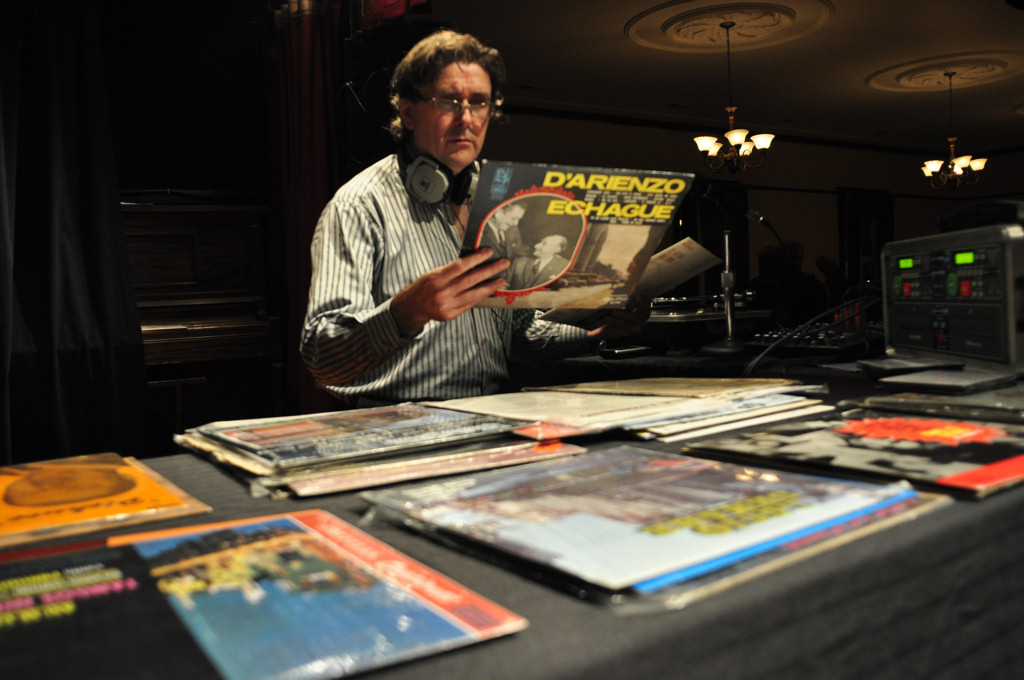 Using a computer it is not hard to stay a few tandas ahead of the game so there isn’t a feeling of time crunch, you have plenty of time to make tandas and a lot of time left over for dancing, when you DJ from vinyl there is no time for doing anything but DJing. Sometimes you are lucky and there are three and sometimes even four songs in a row on one record so you have room to breathe. Most of the time you have to be ready for each song, switching from one turntable to the other, putting one disk away and getting the next one ready. Finding what time there is to sift through the stacks of records to find the next tandas. It is a very different game, much more of a time management game.
Beyond the time management problem though there is what one might call mood management. It is very easy to let the game get a little ahead of you, and then you start to make mistakes, and then the anxiety rises. This is the most important thing to manage because once you start there is no going back, you are on for the duration of the milonga, and if you get too stressed you won’t be able to finish, and the mistakes will become apparent to the whole room. It can feel like disaster is always right around the corner.
Many distracting things can happen, people can try to talk to you, and you have very little attention for conversation. It is best if the host can gently keep people away. Angela understands that and by now most of my audience also understands so it is less of a problem. Still in the few times we have done vinyl milongas at festivals there is always someone who is so enthusiastic about what is going on they climb onto the stage and start trying to talk. I have learned to stay calm and not get too distracted.
The machinery always seems to pick the worst time to have a problem. I remember one time we were getting a lot of noise on one channel so any time I was playing from one of the turntables the noise was a big distraction. This is when you find out that nearly everyone in the audience is a sound technician. There is so much (usually wrong) advice offered up it is very hard to concentrate. Usually people have the most complex theory about what is going on, and usually it turns out to be the stupidest thing causing the trouble. In the case of the turntable, it was the power switch. I don’t know why it occurred to me but cycling the power a few times made the problem go away. Now I know that turntable is prone to this problem so I know what to do when this comes up again. Sometimes it is as stupid as a connector not firmly seated. In the midst of the game you have to keep a cool head and go through things in a methodical way
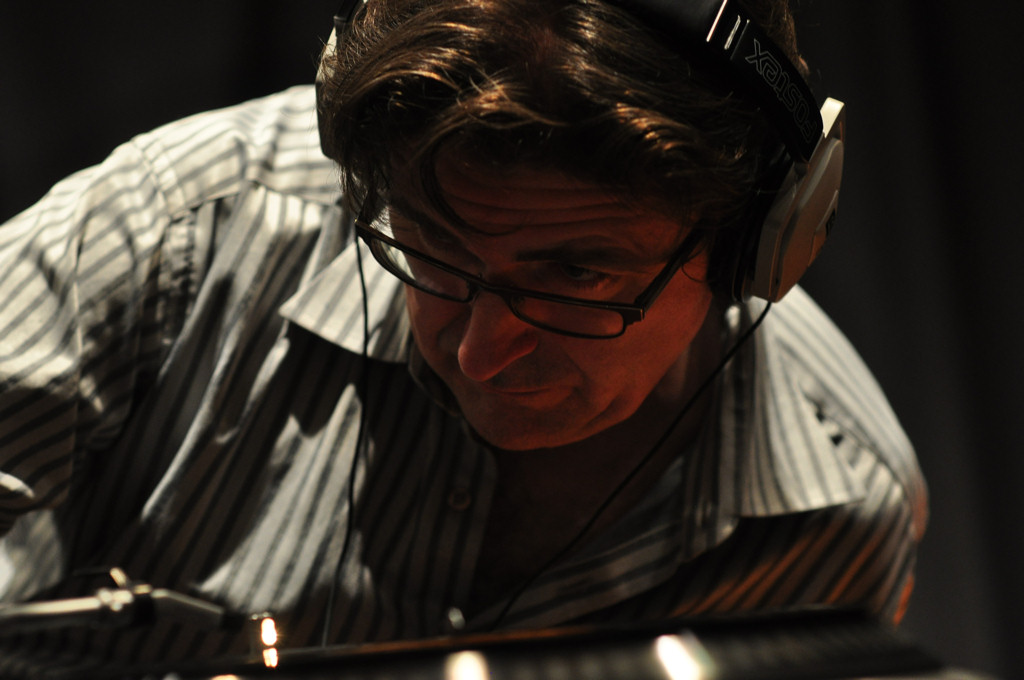 No matter what is going wrong every two to three minutes you have another song to play, and if you don’t keep ahead selecting music you run out of things to play. I always keep track of the records that have a full four songs in a row that make a good tanda. They are the fresh air I sometimes need. They give me time to focus on the record stacks and find more music to play, and to put together the frame of a tanda.
I have more experience now and have many more records to choose from. This is an interesting problem in itself because there really isn’t time to pre-listen to things, you must know the songs by name, and have a pretty good idea of when they were recorded so you don’t get some recording from the late 50’s that isn’t really a great version for dancing mixed in with solid music from the 40’s. All of the great orchestras re-recorded songs later in their careers with different vocalists and sometimes noticeably different arrangements. You really need to know this and act accordingly. For me it is a complication because I don’t own the records so I don’t get to spend offline time with them to get to know the rest of the music available. I do experiment a bit but since most surprises aren’t really good surprises I am pretty careful when I am in front of an audience.
The first time I DJed for Angela with the records she owned ten records. The challenge was to see if I could get through a four hour milonga without switching to using the computer. It was really fun, and I played most of the music on those records with only a couple of repeats. That was a fun challenge, and the occasional mistakes were a source of fun and laughs. These days I sometimes get through a whole night without an audible glitch beyond the sound from the record starting before I have selected that turntable so that the music is already playing as the sound comes up from that side. It can’t be helped, and there is no going back.
There is no going back, and that is part of the game. Oddly most of the time is spent waiting for songs to end, and then there is a flurry of activity that has to all go correctly, and then again there is waiting. I have learned to stay calm during the waiting so my stress level doesn’t go up. It is an interesting skill to learn, to take a deep breath and let everything go and relax, even when things have just about gotten out of control. It is a deep focusing exercise.
This is probably my favorite way to DJ because of the challenge, and the feeling of a real performance. It is intense, demanding and lots of fun. It is full of last minute improvisation. I have to keep my focus always know what is going to happen next, and when things are going all wrong to quickly find a way through. No other way of DJing is like it. I am glad however that I don’t do this every week, then it would be exhausting.
Thank you to Claude Laviano for images used in this article.